The New Conservative Media Empire: How Tucker Carlson is Redefining Right-Wing Influence
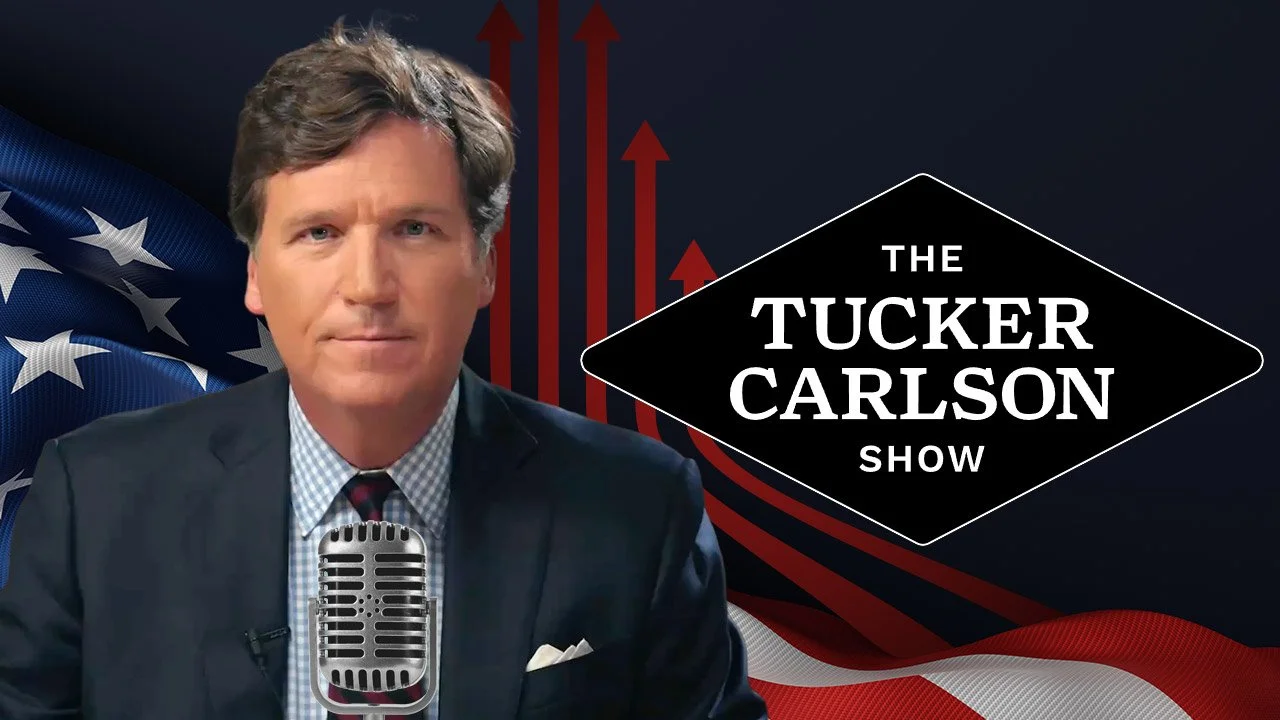
The conservative media landscape is experiencing a seismic shift. Gone are the days when a handful of legacy outlets and traditional voices dominated right-leaning discourse. In their place, a new ecosystem has emerged—one that's more decentralized, more independent, and increasingly driven by personalities who've broken free from traditional media constraints.
At the center of this transformation stands Tucker Carlson, whose meteoric rise since leaving Fox News has redefined what conservative media influence looks like in 2025.
The Numbers Tell the Story
According to the latest Xcelcast Sentiment scoring—a metric that measures audience engagement, loyalty, and resonance—Tucker Carlson has achieved something remarkable: an 84.6 rating that places him in a league of his own. But perhaps more telling than the number itself is the gap between Carlson and everyone else.
The conservative media landscape now looks like this:
Tucker Carlson: 84.6
Shawn Ryan: 79.1
Megyn Kelly: 71.4
Benny Johnson: 70.2
Patrick Bet David: 68.5
Ben Shapiro: 60.4
The distance between Carlson and the field reveals more than just popularity—it suggests he's tapped into something his competitors haven't quite captured.
Tucker's Explosive Growth: From Cable to Digital Dominance
The subscriber trajectory of Tucker Carlson's YouTube channel reads like a case study in modern media disruption:
Started at 2.1 million subscribers
Surged through 3 million, then 4 million
Recently crossed 5.06 million subscribers
This represents a 140% growth rate that shows no signs of slowing. For context, Carlson has built this audience entirely on his own terms, outside the infrastructure of traditional broadcast media. What took decades to build at Fox News, he's replicated—and arguably exceeded—in a fraction of the time.
The Fragmentation Phenomenon
But Carlson's rise is only part of the story. The broader conservative media landscape is splintering into distinct factions, each with its own style, audience, and ideological emphasis:
The Populist-Nationalist Wing (Tucker Carlson): Anti-establishment, skeptical of corporate power, willing to break with traditional Republican orthodoxy on economics and foreign policy.
The Long-Form Investigative Space (Shawn Ryan): Deep-dive interviews with military, intelligence, and political figures that appeal to audiences hungry for substance over soundbites.
The Establishment-Critical Insiders (Megyn Kelly): Former mainstream media figures who've retained credibility while shifting toward more openly conservative positions.
The Youth-Oriented Provocateurs (Benny Johnson): Viral content creators who blend politics with entertainment, optimized for social media distribution.
The Entrepreneurial Business-Politics Hybrid (Patrick Bet David): Content that merges conservative politics with business and self-improvement messaging.
The Traditional Conservative Intellectual (Ben Shapiro): Fact-focused, rapid-fire analysis rooted in conventional conservative principles—notably scoring lowest in the sentiment rankings at 60.4.
What Ben Shapiro's Fall Tells Us
The most striking data point is Ben Shapiro's relatively low sentiment score of 60.4. Shapiro, who once represented the cutting edge of new conservative media through The Daily Wire, now appears to represent something the audience is moving away from.
This isn't about Shapiro's talent or work ethic—it's about what type of conservatism is resonating in 2025. The intellectual, debate-focused, policy-wonk approach that defined conservative media in the 2010s seems to have given way to something more visceral, more anti-institutional, pro-Israel, and more focused on cultural combat than policy details.
The audience isn't looking for someone to win debates with facts and logic anymore—they want someone who reflects their frustration with institutions, their skepticism of consensus narratives, and their sense that the system itself is broken.
Why Tucker Leads
Carlson's dominance in sentiment scoring isn't accidental. He's positioned himself at the intersection of several powerful trends:
Independence from institutional constraints: No network executives, no advertisers to appease, no editorial boards to satisfy.
Willingness to challenge conservative orthodoxy: Whether questioning unlimited aid to Ukraine or criticizing corporate America, Carlson doesn't toe predictable party lines.
Mastery of the populist moment: He speaks to working-class concerns and cultural anxieties in ways that feel authentic rather than calculated.
Platform diversification: Rather than relying solely on YouTube, Carlson has built a presence across X (Twitter), his own subscription platform, and podcast networks.
High-profile interviews: From Vladimir Putin to Donald Trump, Carlson secures conversations that generate both headlines and genuine news value.
The Future of Conservative Media
The data suggests we're witnessing not just the rise of Tucker Carlson, but the emergence of a fundamentally different conservative media model. It's:
More decentralized: Power is distributed across independent creators rather than concentrated in a few networks
More populist: Economic nationalism and skepticism of elites matter more than tax policy and deregulation
More personality-driven: Audiences follow individuals, not institutions
More platform-agnostic: Success comes from building direct relationships with audiences across multiple platforms
More willing to break with GOP orthodoxy: The conservative media class no longer serves as the Republican Party's messaging arm
What This Means
For Republicans seeking to understand their base, these sentiment scores serve as a roadmap. The voices resonating most strongly aren't traditional party spokespeople or think tank fellows—they're independents who've built their own platforms and aren't afraid to criticize their own side.
For media analysts, this fragmentation represents both opportunity and chaos. There's no longer a single gatekeeper who can shape conservative opinion. Instead, there's a competitive marketplace where authenticity, independence, and willingness to challenge orthodoxy determine success.
For Tucker Carlson himself, the 84.6 sentiment score and explosive subscriber growth represent vindication of his post-Fox gamble. He bet that conservative audiences were hungry for something different, and the data suggest he was right.
The Bottom Line
Conservative media isn't consolidating, it's exploding into fragments, with each fragment catering to a specific appetite within the broader right-wing audience. And at the center of this fragmentation, paradoxically, stands one man who's managed to capture the moment better than anyone else.
Tucker Carlson's 84.6 sentiment score isn't just a number; it's a signal that conservative media has entered a new era, one where independence matters more than institutional backing, where personality trumps polish, and where the audience's appetite for anti-establishment voices has never been stronger.
The question isn't whether traditional conservative media can compete with this new model. Based on the data, that question has already been answered. The question now is what comes next—and whether anyone can replicate Tucker's formula, or if we're watching the emergence of something that only works once.